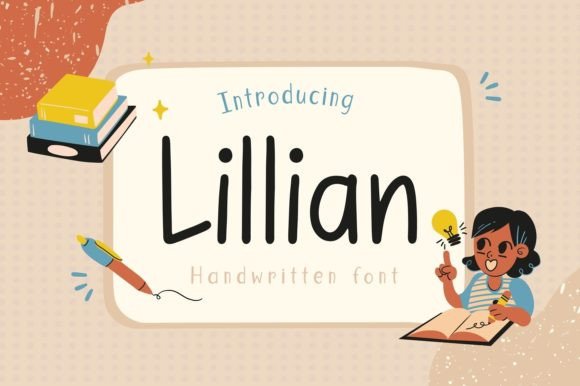
Lillian: A Cute Handwritten Font for Creative Projects
There I was, staring at a blank brand board, trying to find the right visual voice for a new artisanal café. The client wanted something warm, approachable, and a little whimsical. After testing several options, Lillian caught my eye. It wasn’t just the cute curves or the soft, flowing strokes—it was the way it felt like a friendly whisper in a world of loud headlines.
The Personality of Lillian
Lillian is a handwritten font that carries a sense of playfulness and authenticity. Its lightness gives it a casual, unpretentious vibe that’s perfect for brands looking to feel more human. The characters are not overly ornate, but they have enough personality to stand out without demanding attention. It’s the kind of font that feels like it was written with a pencil on a napkin—messy, yet intentional.
What makes Lillian especially appealing is its versatility. It works well as a display font, but it also has enough structure to hold up in more formal design elements like packaging labels or social media headers. It doesn’t scream “handmade,” but it definitely whispers it.
Testing Lillian in Real-World Branding
I first tried Lillian on a logo concept for the café. The name was simple—“Haven Coffee”—and the font added just the right amount of charm without overpowering the design. When paired with a clean sans serif for the tagline, it created a nice contrast that felt modern yet inviting.
On a packaging mockup, Lillian looked great on coffee bags and menu cards. The light weight made it easy to read at a glance, which is important for a retail product. It also worked well when scaled down for small labels, though I noticed some characters became slightly less legible at very small sizes.
When I used Lillian on a website header, it brought a friendly energy to the page. It wasn’t the best choice for body text, but as a headline font, it gave the site a personal touch that felt authentic. On social media graphics, it stood out without being too flashy, making it ideal for Instagram posts or Facebook banners.
Strengths and Limitations
Lillian shines in projects that benefit from a warm, approachable tone. It’s an excellent choice for logos, packaging, and digital assets where a bit of character is needed. However, it’s not the best option for long-form text or formal corporate branding. Its casual nature might not align with the professionalism expected in certain industries.
One thing to keep in mind is that Lillian’s lightness can make it less readable in low-contrast situations. If you’re using it on dark backgrounds or in print, you may need to adjust the spacing or weight to maintain clarity. It also lacks the boldness needed for high-impact headlines in some contexts.
Pairing Lillian with Other Fonts
When pairing Lillian with other fonts, a clean serif or sans serif often works best. A classic serif like Georgia or a modern sans like Helvetica can balance the hand-drawn feel of Lillian without clashing. For a more playful look, pairing it with another script font can add depth and variety.
If you’re designing a website, consider using Lillian for headings and a neutral sans serif for body text. This keeps the design cohesive while maintaining readability. In editorial design, Lillian can be used for pull quotes or section titles to add visual interest without overwhelming the reader.
Practical Tips for Using Lillian
Before finalizing any project with Lillian, test it in different sizes and contexts. Print a sample or use a digital mockup to see how it looks in real-world conditions. Pay attention to how the characters interact with other design elements, especially in tight layouts or on small screens.
Also, check the font licensing before using it in client work. Make sure it’s available for commercial use and understand any restrictions that may apply. Some fonts have limitations on web embedding or print usage, so it’s always good to verify these details upfront.
Finally, don’t be afraid to experiment. Lillian is a flexible font that can adapt to many design styles. Whether you’re working on a handmade shop branding or a creative studio identity, it has the potential to add a unique touch that sets your work apart.